What a batch certificate actually tells you, and how to read one.
Research peptides are sold with a lot of documentation and not much explanation of what any of it means. Here is what the certificate is, what each figure on it measures, and how to check one against the laboratory that issued it.
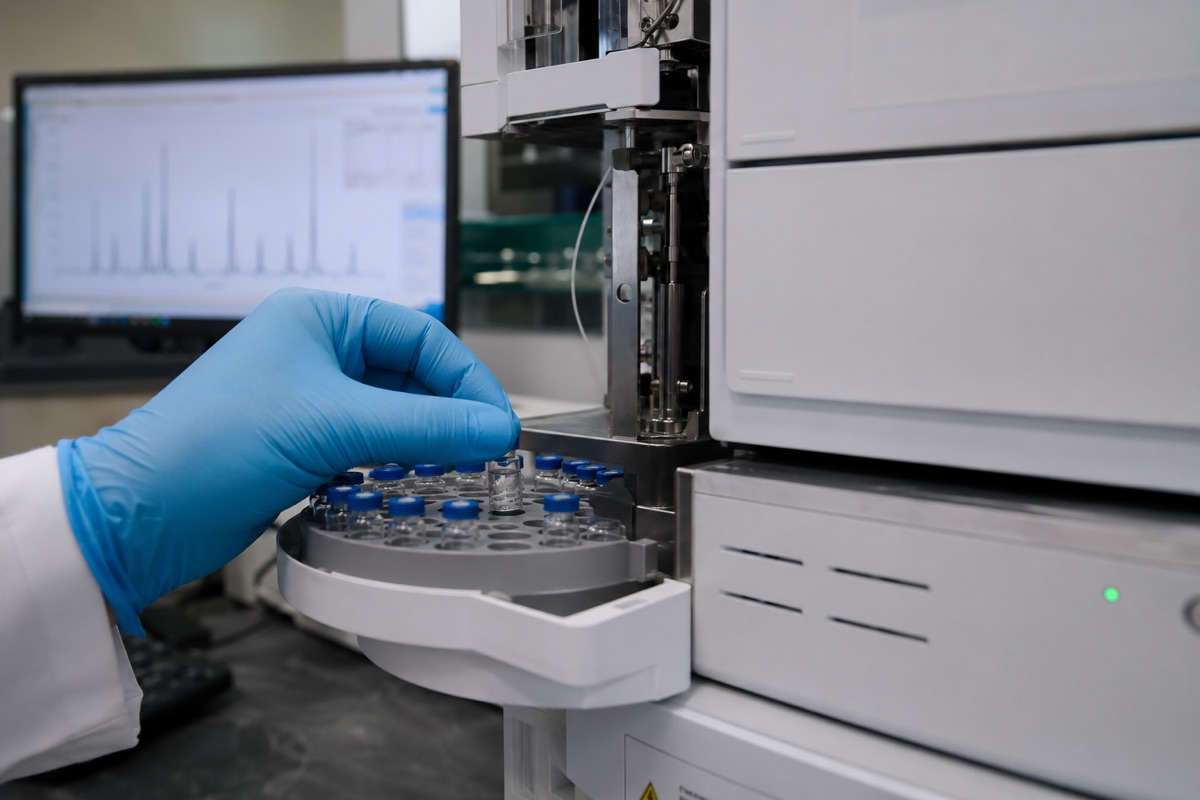
Almost every research peptide sold today comes with a certificate attached. Very few buyers have ever been told what the document is supposed to contain, which makes it hard to tell a thorough one from a decorative one.
This is a plain guide to that. No product is assessed here and nothing below is advice about using anything. It is simply what the words and numbers on a certificate of analysis mean, and what you can do with them.
Start with what the document is
A certificate of analysis is a record of tests run on a sample from one specific production batch. It is not a description of a product line, and it is not a quality badge. It reports what a laboratory measured, on one batch, on one date.
That distinction does most of the work. A certificate that names no batch is not describing anything you can hold. It might be accurate about some material somewhere, but it cannot tell you about the vial in front of you.
What a thorough certificate lists
Purity is the figure everyone looks at, and on its own it answers less than people assume. A full document usually reports several separate measurements, each answering a different question:
How much of the contents is the dominant compound, reported as a percentage. It says how clean the sample is, not what it is.
Weighs the molecule and checks that weight against the compound named on the label. This is the question purity cannot answer.
Freeze-dried powder draws in moisture, and moisture is mass that is not the compound. This measures how much of the vial is water.
Elemental contamination and bacterial contamination. Both are separate from purity entirely, and neither shows up in a purity figure.
A sample can be 99% pure and still be 99% of the wrong molecule. Purity and identity are two different questions, and a thorough certificate answers both.
The three things worth checking
You do not need to read a chromatogram to get most of the value out of one of these documents. Three checks cover it:
Does it name a batch? One specific, named batch or lot number, matching the one on the vial.
Does it name the method? Purity depends on how it was measured, so a figure with no method beside it cannot be compared to any other figure.
Can you check it at the source? The strongest version is a key that resolves on the laboratory’s own website, because a document held only by the seller is confirmed only by the seller.
What one looks like in practice
Below is a real record, so the checks above have something to sit against. This is one batch supplied by Valar Peptides and analysed by Novagen. The key resolves in Novagen’s register, which is a different company on a different domain.
Reading the number itself
Two figures on the same document mean different things and are easy to mix up. The purity percentage describes the sample that was analysed. The specification is the threshold the batch had to clear to be released. A result of 99.30% against a specification of 98.0% minimum means the batch was measured well above the line it had to meet.
It is also worth expecting variation. Chromatography does not return identical figures batch to batch, so a supplier publishing a run of results that are all slightly different is showing you real measurements. A run of identical numbers is the thing that should read as odd.
The short version
A certificate is only as useful as your ability to check it. Look for a named batch, a named method, and a key that resolves somewhere the seller does not control. If all three are there, you can read the document for what it is: a record of what a laboratory measured, on a specific batch, on a specific day.
About this article. This is sponsored educational content published for general information only. It is not medical advice, it makes no health claims, and it does not describe or imply any outcome from using any product. Nothing here is intended to diagnose, treat, cure or prevent any disease. Purchasers must be 18 or over. Compounds referred to are supplied for laboratory research use only and are not for human or veterinary use. Test figures shown are the results recorded for the one named batch and do not describe any other batch. Novagen Analytical Laboratories is an independent testing facility; certificates are issued and hosted by Novagen, not by the supplier or by this publication.